case study
.lab
Strengthening design culture by showcasing student creativity.
role
Research & Insight Mapping
Visual Design
Strategic Communication
principles
Design Thinking
Frame Creation
DURATION
3 Months
tools
Figma/Figjam
Framer
After Effects
background
understanding the problem
Interviews
PARTICIPANTS
Informatics Students/.lab’s Coordinator
Purpose
Understand how .lab is perceived and what drives or prevents engagement outside of class.
Focus Areas
How students make decisions around extracurricular initiatives.
Factors that influence participation.
Perceptions of .lab as a concept and format.
User Survey
PARTICIPANTS
Informatics Students
Purpose
Follow up on interviews and reach a broader student group.
Focus Areas
Understand how common the patterns from interviews were.
Gain a broader view of how students relate to .lab.
problem definitions
Industry Connection
Many said they would have joined if there was a clearer link to the design industry. Real projects, real people, something to build on. Without that, .lab felt disconnected from the rest of their academic or professional path.
Time & Priorities
Even students who liked the idea found it hard to prioritise. When time and energy are limited, things that are optional tend to fall off the radar.
Unclear Identity
Was it a space? A project? A brand? The lack of clarity around what .lab actually was made it hard for students to understand how to get involved, or why they should.
paradoxes
#1
Freedom vs. Structure
Students liked that .lab was self-driven and low pressure. At the same time, many said they didn’t know what to do with that freedom. They wanted more clarity, more direction, something to grab onto.
#2
Low Commitment vs. High Expectations
.lab didn’t come with deadlines or course credits. Still, people hoped it would deliver real value. They expected something useful, visible, maybe even career-relevant, without knowing exactly how or why.
#3
Inclusive but Undefined
It was open to everyone, which sounded good. But that openness also made it blurry. Who was it really for? What was it trying to do? Without a clear focus, it was hard to feel like you belonged.
#4
Autonomy vs. Connection
Students wanted to explore their own interests. But doing it alone, without a shared space or sense of community, made it hard to stay motivated.
Outcome
Understanding the Context
Mind Mapping
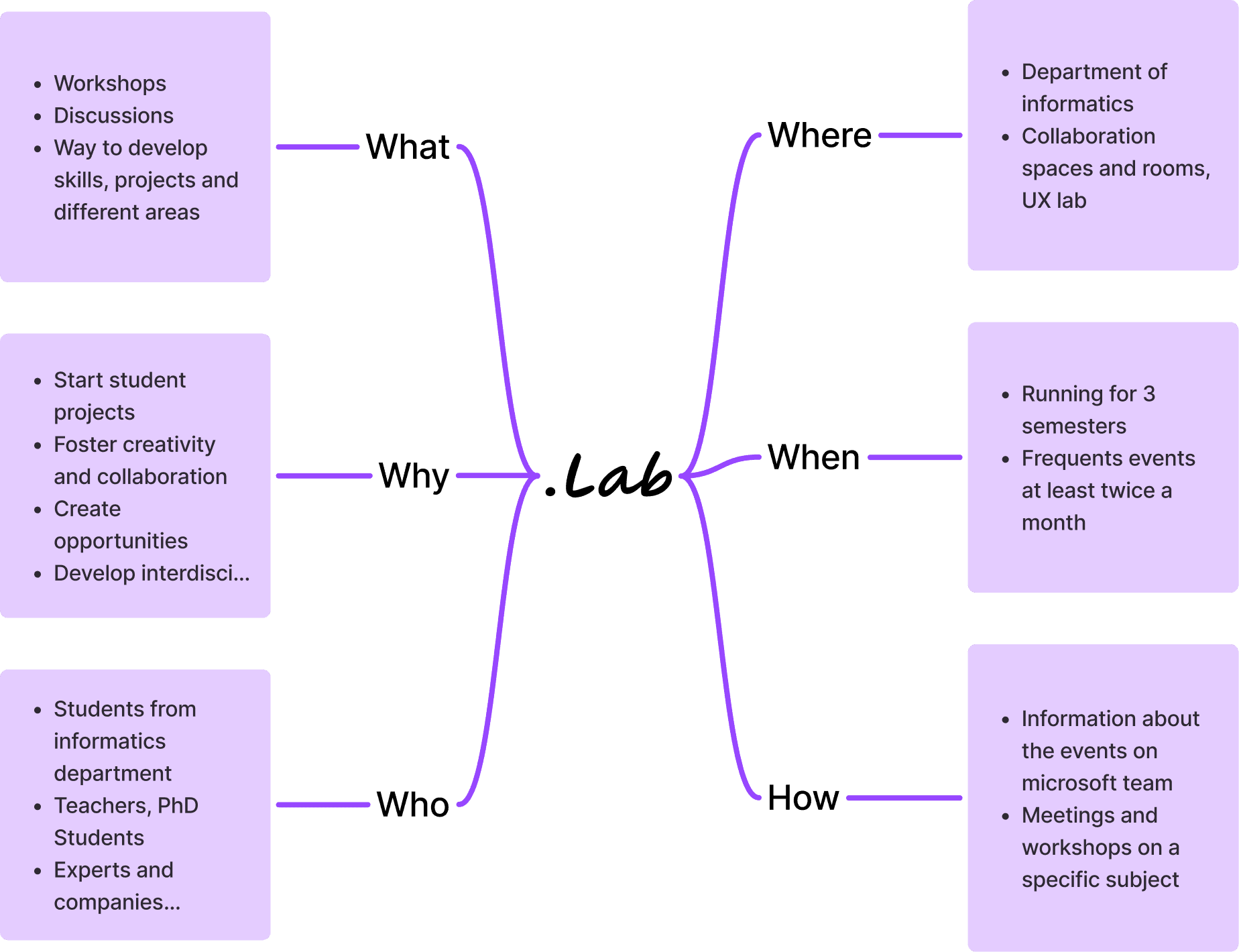
What, Why, Where, and When?
To uncover gaps in how .lab was perceived, we mapped it against four basic questions: what it is, why it exists, where it happens and when. This simple structure exposed inconsistencies and revealed which elements were unclear versus which could serve as future anchor points.
Stakeholder Mapping
Identifying Roles, Motivations and Missing Links
We also mapped who was involved, what they cared about and what roles they could play. This helped reveal where strong connections could form and where gaps in the system were limiting .lab’s potential.
Students
Faculty & Coordinators
Industry Partners
Alumni
Scenario-Based Thinking
Exploring Future Scenarios
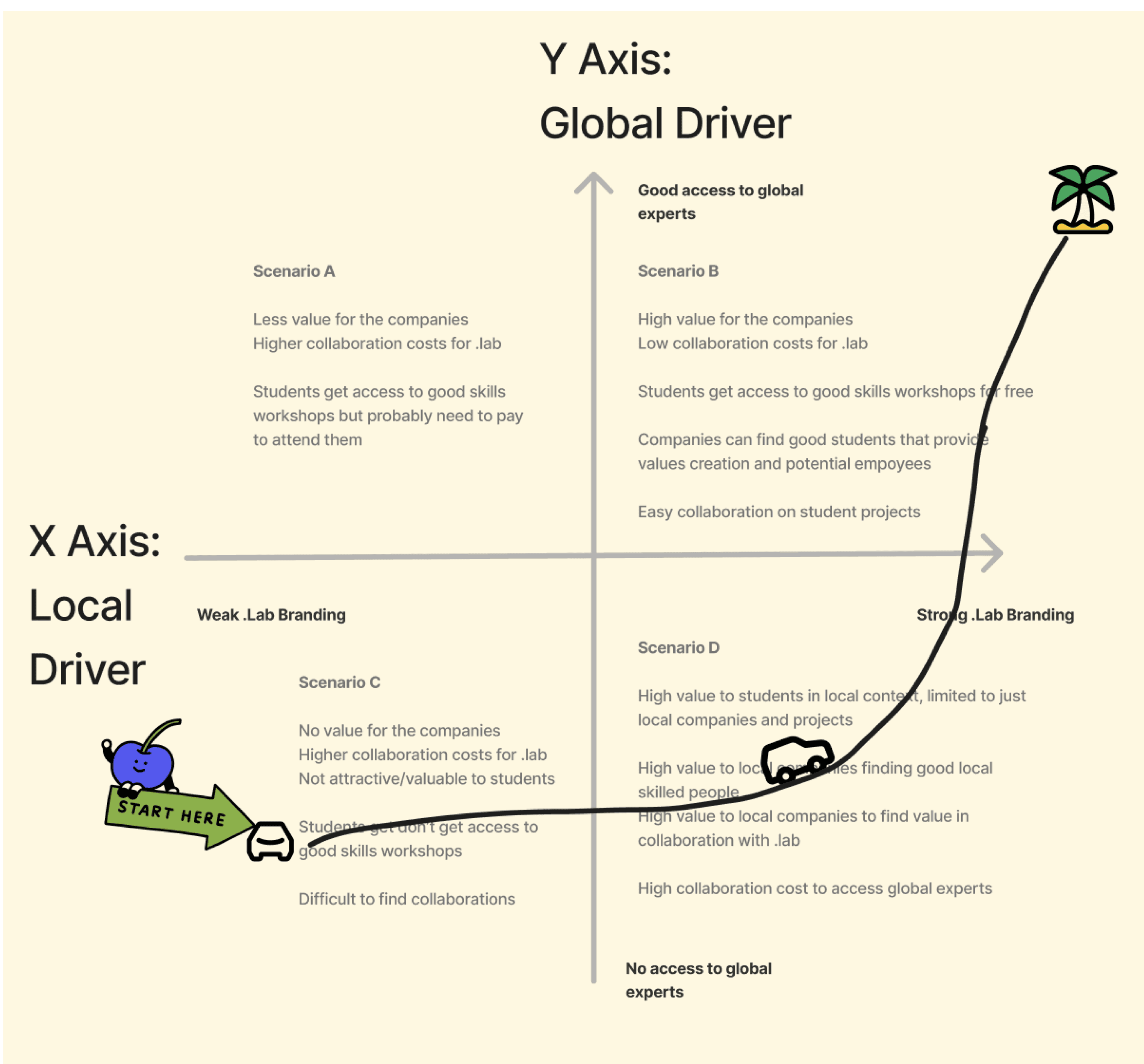
We explored possible futures for .lab by mapping out two key uncertainties: how strong its identity could become, and how much it might collaborate with people outside the university. Thinking this way helped us reflect on the risks of staying undefined, but also what might be possible if .lab grew into something more intentional and better connected.
Outcome
Understanding the Field
Local Orbits
What Makes an Initiative Feel “Real”?
We looked at other student-run spaces to understand why some initiatives seem to work better in practice. What makes them feel grounded, alive, and worth the effort? We interviewed the head coordinator of E‑Puben, a student-led bar, to explore what made that initiative feel embedded in student culture. The contrast to .lab quickly became useful in clarifying what might be missing.
E-Puben

Structured, Recognized, and Rewarding
E‑Puben has a clear setup: an official committee, defined responsibilities, and visible perks. People know what it is, how to join, and what they get out of it. Even small contributions come with recognition, social status, and a sense of belonging.
.lab

Open, Undefined, and Easy to Overlook
In contrast, .lab was open-ended but blurry. There was no committee, no real entry point, and no clear value in return. Students often said they liked the idea, but didn’t know how to engage or if it would lead anywhere. The openness gave it potential, but also made it easy to ignore.
User Personas
Making the Barriers More Tangible
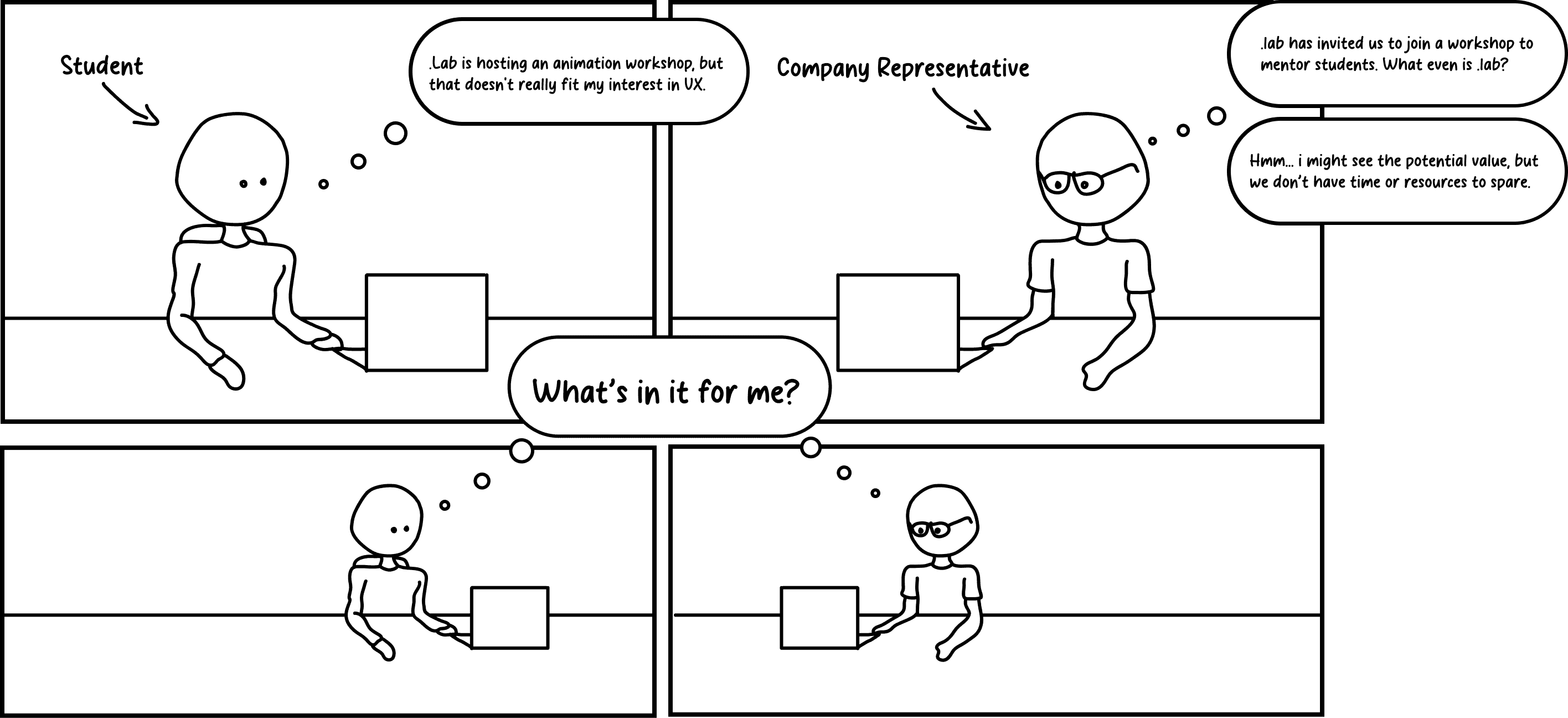
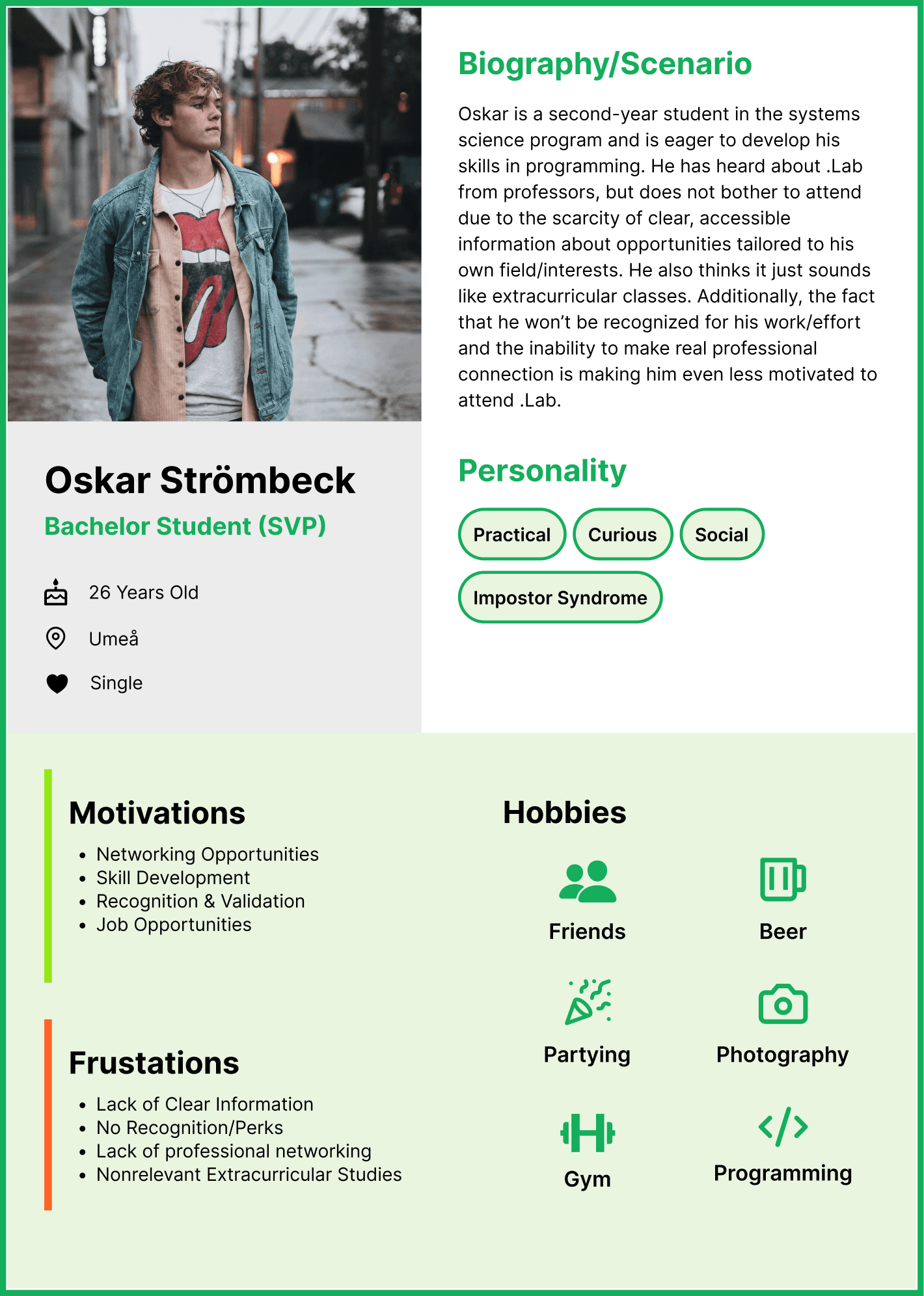
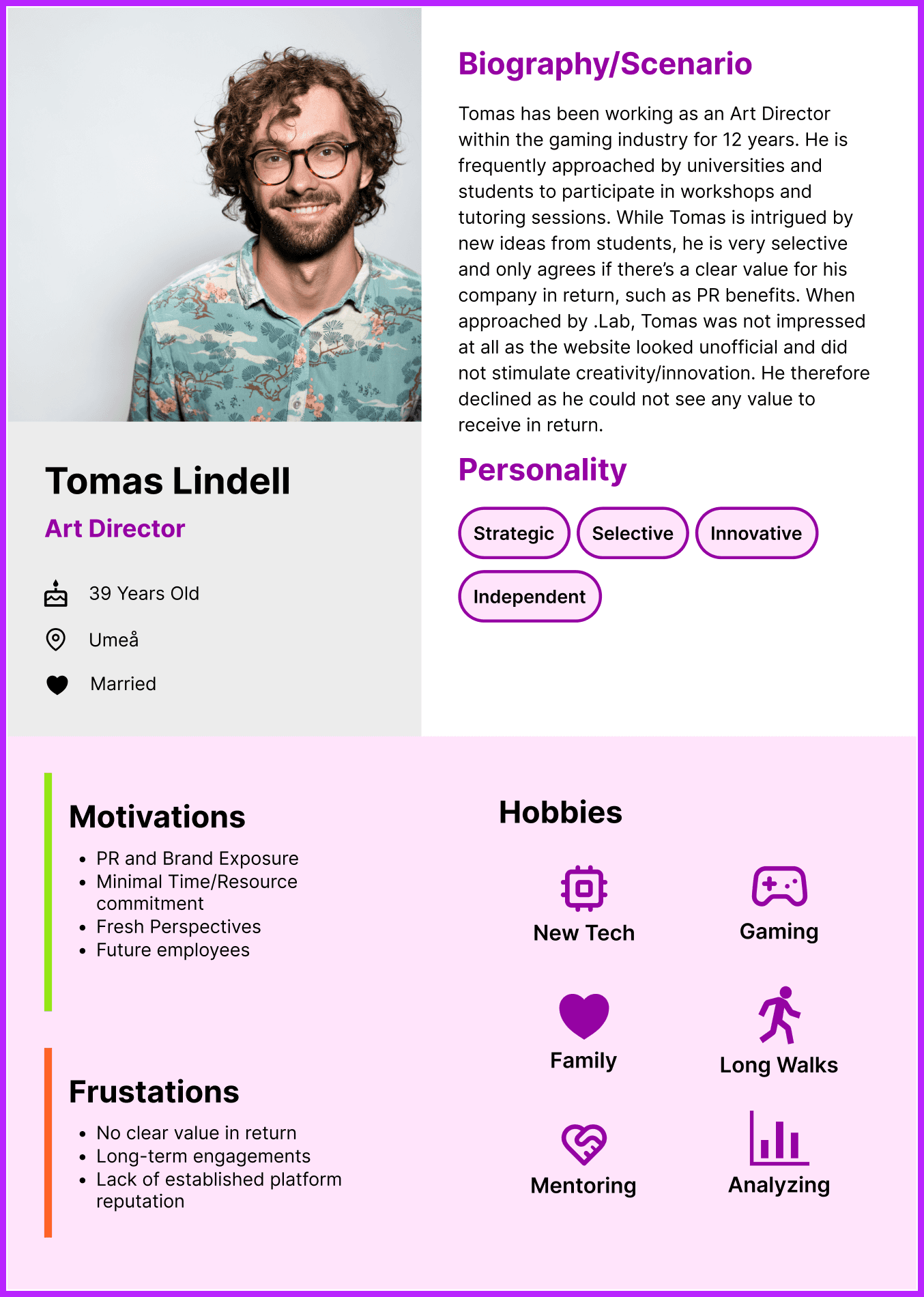
To make sense of the different needs and disconnects, we created two user personas:
The Student
Curious and motivated, but unsure what .lab is or how to get involved. Wants to meet peers, build a portfolio, and be seen.
The Expert
Open to mentoring or collaborating, but lacks a clear way in and doesn’t fully understand the point of .lab.
Outcome
Storyboarding